
Cane River Confluence
Appalachia Rising was pleased to secure funds to contribute to this project.
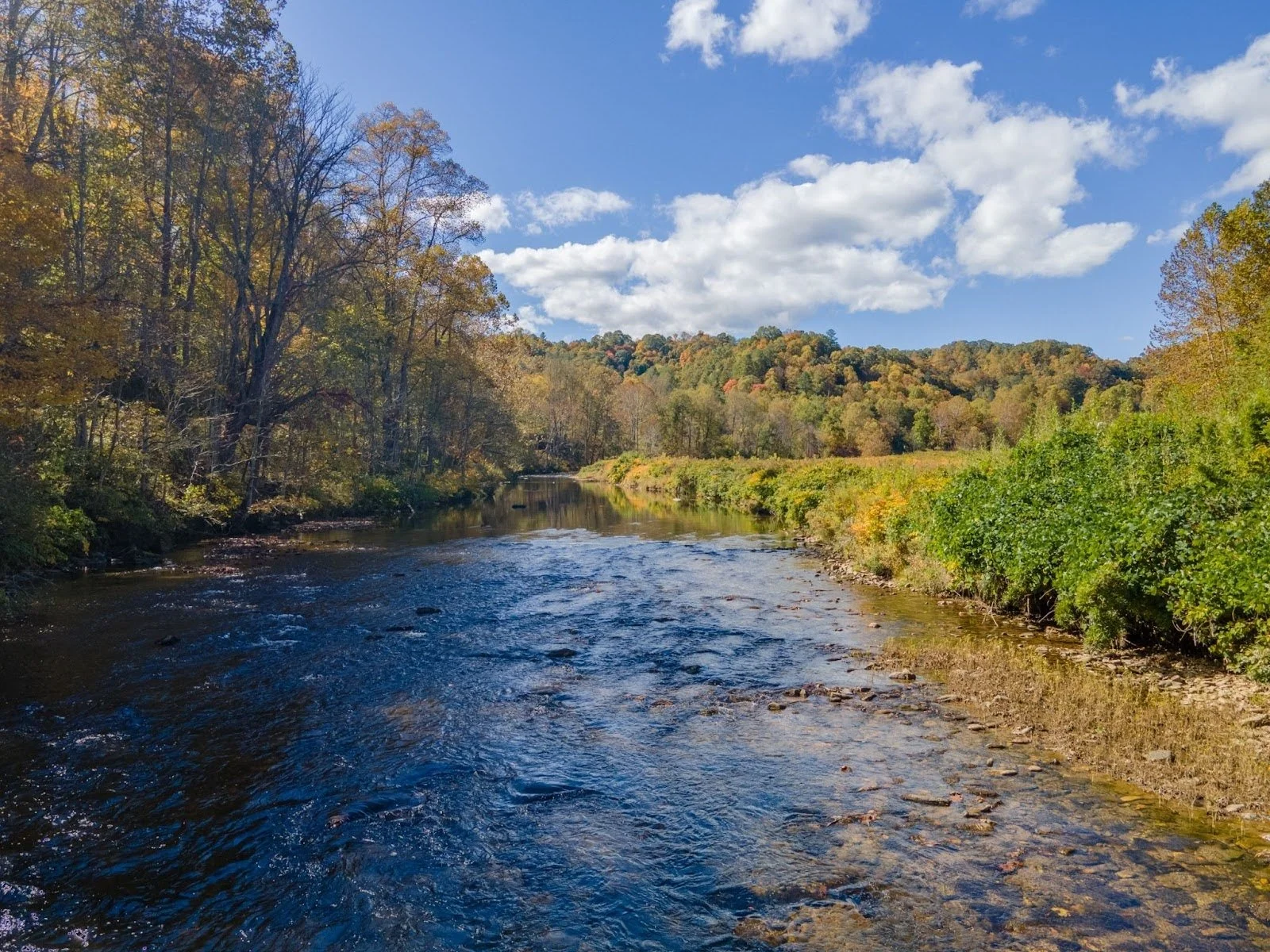
This 424-acre conservation opportunity encompasses 1.5 miles of critical river frontage along North Carolina's Cane and Nolichucky Rivers, offering multiple environmental and community benefits in a region severely impacted by Hurricane Helene. The property's primary value lies in its flood mitigation potential, addressing urgent needs in an area that experienced catastrophic flooding during the recent hurricane. Beyond its immediate role in floodplain restoration, the land holds promise for future public recreation development, including a riverside park with boat launch facilities to support paddling activities and guided river excursions.
The ecological significance of this property is substantial, serving as a documented habitat for the endangered Appalachian Elktoe Mussel and other threatened freshwater mussel species. This aquatic biodiversity makes the site particularly valuable for conservation purposes, as these imperiled species require protected riverine habitats to survive. The acquisition would safeguard these critical ecosystems while enabling comprehensive floodplain restoration work essential to the area's recovery and future resilience.
An important cultural dimension strengthens the conservation case: the property supports a thriving population of native rivercane, a resource of profound significance to the Eastern Band of Cherokee Indians. Tribal members currently access this site through a private agreement with the landowner to harvest rivercane for traditional basketry and weaving practices. Permanent conservation of the property would transform this arrangement into perpetual access, securing an increasingly rare natural resource that is central to Cherokee cultural heritage and traditional crafts. The SAHC has committed to maintaining this tribal access as part of any acquisition.